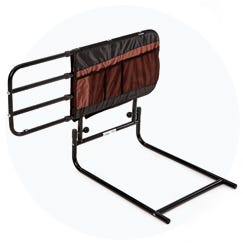
A bed rail gives you something solid to push up from and lower down onto, which makes a real difference if getting in and out of bed feels unsteady or takes more effort than it used to.
Bed rails suit a wide range of situations: recovering from surgery, managing a condition that affects balance or strength, or simply feeling less confident getting up in the night. Most of our rails are tool-free to fit, wipe-clean, and designed to fold down flat when you don't need them.
If you're also looking at the broader picture of bedroom comfort and safety, Will Harrison's guide to bed accessories covers rails, cradles, mattress protection and more in one useful place.
Bed Rail FAQs
Can any bed rail be fitted to any bed?
Not quite. Most standard divan and slatted beds are straightforward, but there are a few things to check before buying: the bed frame type, the mattress depth, and the overall bed height. Bed rails are not always compatible with electric adjustable beds, as they can interfere with the movement mechanism. If you're unsure, check the product specifications carefully or contact our team before ordering.
Can a bed rail help me sit up in bed?
A standard bed rail gives you something to grip and pull against when sitting up, which helps if arm or core strength is limited. If sitting up independently is the main challenge rather than getting in and out of bed, it is also worth looking at a bed support ladder, which attaches to the foot of the bed and gives you a series of rungs to walk your hands up as you raise yourself. Some people find it easier to use than a fixed rail on the side, and both can be used together.
Are bed rails safe for adults?
Yes, when used correctly and for the right reasons. They are widely used by adults recovering from surgery, managing long-term conditions, or anyone who simply feels less steady getting in and out of bed. The key is choosing the right rail for your bed type and fitting it according to the instructions. Will Harrison covers what to look for when buying bed rails and other bedroom aids in his guide to bed accessories, which is worth a read if you are buying a rail for the first time.
Do I need a bed rail on both sides?
t depends on how you use the bed and where the risk is. One rail on the side you get in and out from is usually sufficient for support when moving. Two rails make more sense if the main concern is preventing rolling out during sleep, particularly overnight. If the bed is against a wall on one side, a single rail on the open side is often all that is needed.
What is the difference between a bed rail and a bed bumper?
A bed rail is a rigid support frame that attaches to the side of the bed. It gives you something to grip when getting in and out, and prevents rolling out during sleep. A bed bumper is a cushioned pad that covers the rail itself, reducing the risk of bruising or skin irritation if you roll against it in the night. Bumpers are particularly useful for anyone with fragile skin or conditions like dementia where movement during sleep is less controlled.
What is a blanket cradle and who is it for?
A blanket cradle is a lightweight frame that sits over the lower half of the bed and lifts the sheet or duvet away from your legs and feet. It is mainly used by people recovering from wounds, pressure sores, burns or surgery where contact from bedding causes discomfort or slows healing. They are also useful for anyone with conditions that cause sensitivity in the feet or lower legs, such as neuropathy. Most are simple to fit and fold flat for storage.

 My Orders
 Track an Order
 Returns Information
 Contact Us